
Dry Processing Method for A Luoi Arabica Coffee
DRY PROCESSING OF A LUOI, HUE ARABICA COFFEE
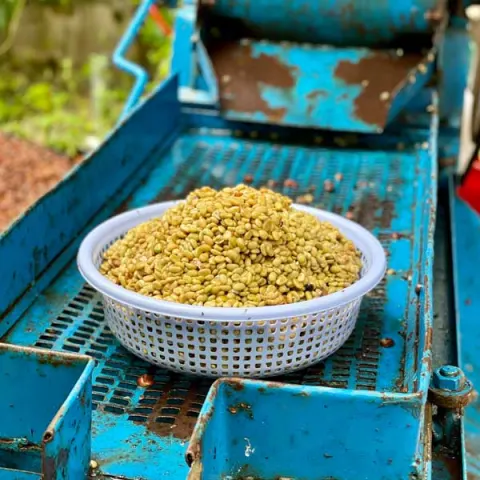
Among coffee processing methods, dry processing is the oldest and the most natural. Dry processing gives coffee a more complex flavor than other methods, and controlling natural fermentation is much harder. Traditionally, dry processing has been the simplest method: the cherries are picked and dried whole, with the parchment bean still inside.

Depending on the weather, a dry-processed batch can turn out great or poor. On good sunny days, dry processing is easy. Coffee cherries dried under the strong sun shrivel up like dried bananas, jackfruit or grapes. Fermentation of the cherry slows and stops once it is dry enough.
Conversely, on days without sun, with heavy cloud and high humidity, drying the whole cherries takes longer, leading to over-fermentation and unwanted flavors in the cup. Worse, if the coffee does not dry in time, it becomes heavily moldy and harmful mold toxins can remain in the beans. When drying goes smoothly, the cup has more fruity aromas and high sweetness.

Today, as people study coffee processing more deeply, dry processing is a method widely used to produce a cup full of aroma and body.
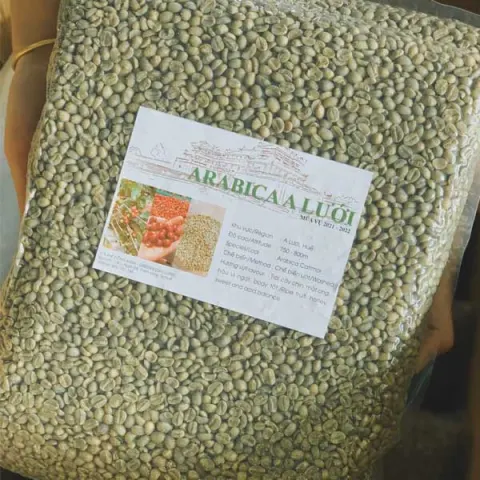
Even though the weather in Hue is not brilliantly sunny, Greenfields Coffee still has a batch of dry-processed Arabica Catimor from A Luoi, and the processing area is filled with the aroma of coffee.

Related Articles
 THE STORY OF A LƯỚI COFFEE · 2023/03/22
The Story of “A Luoi Hue Arabica Coffee” by Greenfields Coffee
The story began in the last months of 2016, with a desire to rebuild the coffee industry in Hue, starting from the growing region of A Luoi (A Lưới) – a forgotten raw-material region. Greenfields Coffee wants to create a high-quality coffee from Hue’s own growing region so that coffee becomes a specialty of Hue, while also helping to improve the lives of coffee growers, especially the ethnic minority people of A Luoi.
 THE STORY OF A LƯỚI COFFEE · 2023/03/22
What is wet processing (washed processing) of coffee?
What is wet-processed (washed) coffee? How does Greenfields Coffee wet-process its coffee? What are the pros and cons of wet processing?